
GuideUpdated 25/10/2026
Orangery, conservatory or extension: what’s the difference?
Short answer
A conservatory is mostly glazed, an extension is mostly solid with windows, and an orangery sits between the two: brick piers and a solid perimeter roof around a central lantern. Orangeries and extensions are more comfortable all year; conservatories are cheaper but get hot and cold.
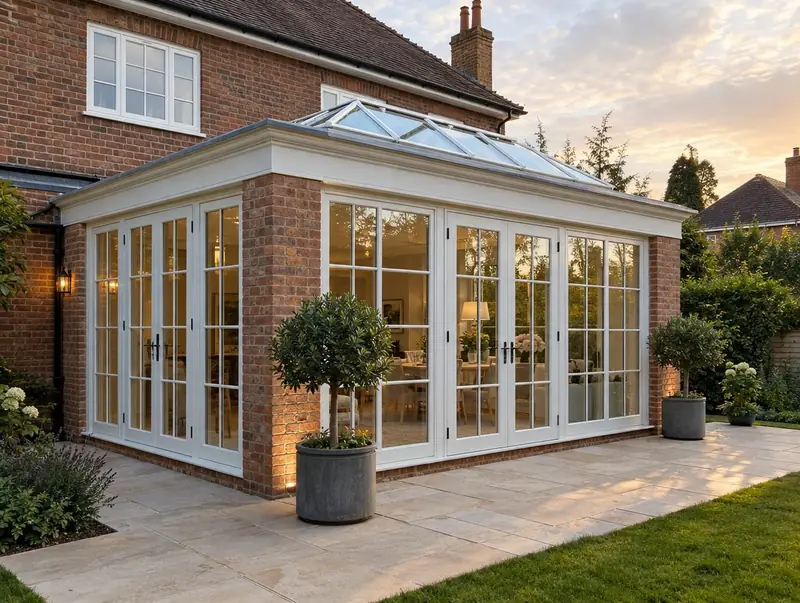
Construction
- Conservatory: low dwarf wall, glazed walls and a glazed or lightweight roof.
- Orangery: brick piers, tall glazing, insulated perimeter roof and a central lantern.
- Extension: insulated cavity walls and roof, with windows and doors.
Building regulations
In England and Wales, ground-level conservatories under 30 m², separated from the house by external doors and with their own heating controls, can be exempt. In Scotland the exemption is limited to about 8 m². Most orangeries and all extensions need building regulations approval.
Cost
Orangeries typically cost £2,400–£3,400 per m² of floor area including VAT, close to a single-storey extension at £1,950–£2,900 per m² of floor area.
Sources and further reading
This guide is general information, not legal or tax advice. Rules change and depend on your property; we confirm what applies to your project at the survey.
More guides
Start with a free home visit
Call 0800 088 6248 or get an instant guide price online.