
What is a garage conversion?
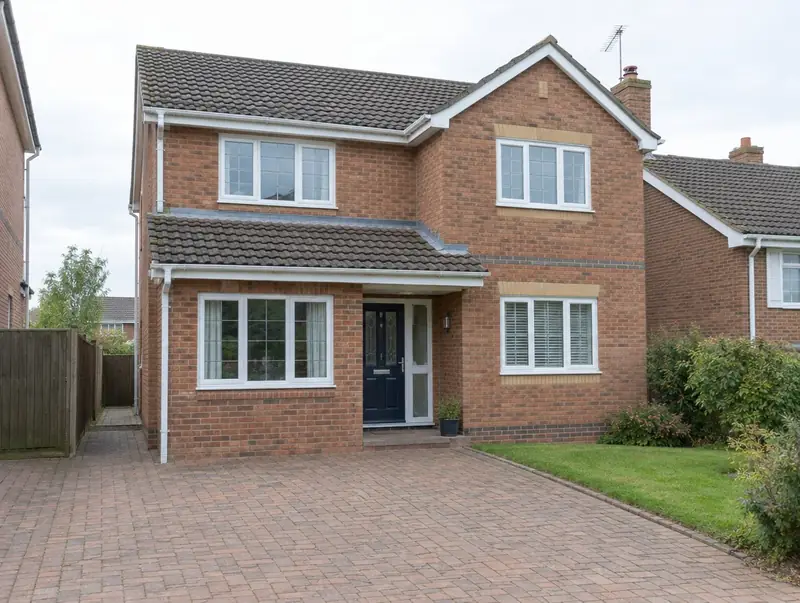
A garage conversion turns an integral or attached garage into habitable space, such as a study, playroom, bedroom or utility. The garage door is replaced with a wall and window, the floor is raised and insulated, and the walls and roof are brought up to building regulations.
How much does a garage conversion cost in County Armagh?
In County Armagh, a garage conversion typically costs £15,500–£26,000 for a single integral garage, including VAT at 20% (standard rate). We start from a UK-wide guide and adjust it for Northern Ireland, where labour and materials are typically about 14% below average. Design, structural calculations and council fees are extra.
| Size or type | Guide range |
|---|---|
| A single integral garage | £15,500–£26,000 |
| Higher specification | £26,000–£32,500 |
The biggest cost drivers are:
- Foundations under the old door opening
- Bathroom or kitchen
- Single or double garage
- Integral, attached or detached
Your exact price depends on the survey and drawings. The guide price tool gives a quick range in the meantime.
Do you need planning permission for a garage conversion in County Armagh?
Whether you need planning permission depends on your house and its location in Northern Ireland. In Northern Ireland a garage conversion usually does not need planning permission if permitted development rights apply, but building control approval is needed.
In Northern Ireland building control approval comes from the council, usually through a full plans application or a building notice, with inspections during the work and a completion certificate at the end.
If the answer is not clear-cut, we can apply for formal confirmation before you commit to the build.
What we handle
The work we manage on a garage conversion:
- Wall and ceiling insulation
- Drawings and building control application
- Foundation check under the garage door opening
- Planning check for removed permitted development rights
- Floor raised with insulation and damp-proof membrane
- New wall and window to replace the garage door
How long does it take?
The build itself usually takes 3 to 6 weeks on site. Before that, surveys, drawings and approvals usually take 6 to 12 weeks, longer if the council asks for changes.
Building in County Armagh
Northern Ireland has many detached and semi-detached homes on generous plots, which suits single-storey rear extensions and garage conversions.
Towns we cover in County Armagh include Craigavon, Portadown and Armagh.
How it works
- 01
Survey and brief
We visit, discuss your ideas and budget, and survey the property or site at no cost.
- 02
Drawings and written quote
We prepare the design and give you a written, itemised quote with inclusions and exclusions.
- 03
Approvals in place
We handle planning, building control and neighbour notices before work starts.
- 04
Construction and completion
We build, put right any snags and hand over the building control certificate.
Questions about garage conversions in County Armagh
Can a detached garage be converted?
Yes, but using it as separate living accommodation may need planning permission.
Do I need planning permission for a garage conversion in County Armagh?
In Northern Ireland a garage conversion usually does not need planning permission if permitted development rights apply, but building control approval is needed.
How much does a garage conversion cost in County Armagh?
In County Armagh, a garage conversion typically costs £15,500–£26,000 for a single integral garage, including VAT at 20% (standard rate). Your fixed price depends on the survey and drawings.
Do you build garage conversions in County Armagh?
Yes. We build garage conversions across County Armagh, including postcodes BT35, BT60, BT61, BT62 and BT63. Every project starts with a free home visit.
Will losing the garage affect parking?
Councils sometimes object if on-street parking is under pressure. We check local parking standards.
Do I need building regulations approval?
Yes. Converting a garage to a habitable room needs building control approval for insulation, ventilation, fire safety and the new wall.