
What is a house renovation?
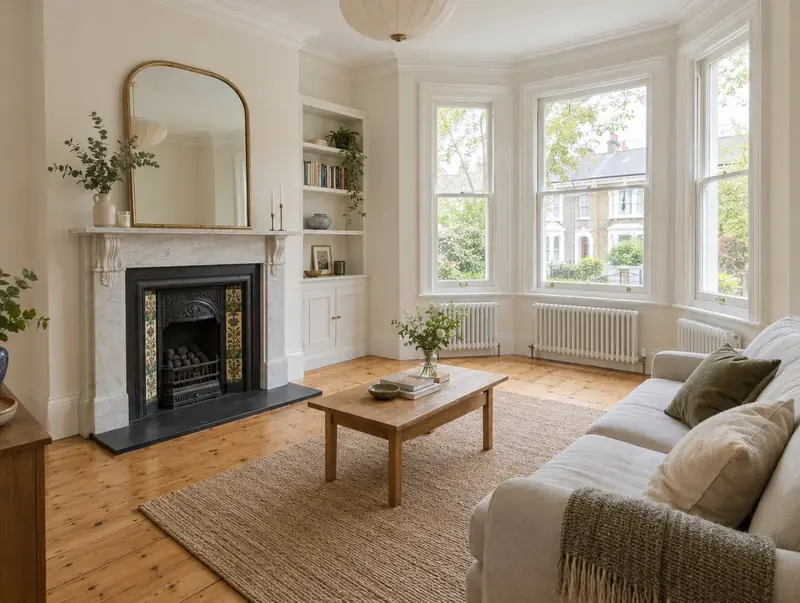
A house renovation brings an older or tired home up to date. It can include rewiring, a new heating system, replastering, new floors, windows, kitchens and bathrooms, and changes to the layout. A full renovation is often combined with an extension or loft conversion.
How much does a house renovation cost in Dumfries?
In Dumfries, a house renovation typically costs £850–£1,750 per m² for a medium to full renovation, including VAT at 20% (5% may apply to homes empty for two years or more). For a typical 90 m² project that is roughly £76,500–£157,500. Prices in Scotland sit near the national average for this kind of work, and the range for Dumfries reflects that. Design, structural calculations and council fees are extra.
| Size or type | Guide range |
|---|---|
| Smaller project (63 m²) | £53,500–£110,000 |
| Typical project (90 m²) | £76,500–£157,500 |
| Larger project (126 m²) | £107,000–£220,500 |
| Rate per m² | £850–£1,750 |
The main things that change the cost:
- Extent of rewiring and replumbing
- Structural and damp repairs
- Kitchens and bathrooms
- Whether you live in during the work
For a figure based on your own measurements, try the guide price tool, then book a free home visit for a fixed quote.
Do you need planning permission for a house renovation in Dumfries?
Whether you need planning permission depends on your house and its location in Scotland. In Scotland internal alterations such as structural changes or new bathrooms may need a building warrant, and listed homes need listed building consent.
Scotland has no Party Wall Act. Work on shared walls is governed by your title deeds, the Tenements (Scotland) Act 2004 for flats, and common law, so we agree arrangements with neighbours in writing before work starts.
We check this for your address before design work starts, so there are no surprises later.
What we handle
What we take care of:
- Building control for notifiable work
- Structural repairs and damp treatment
- Kitchens and bathrooms
- Rewiring and heating upgrades
- Condition survey and scope of works
- Decoration
How long does it take?
Allow 8 to 20 weeks on site depending on scope. Design and approvals come first and typically take 6 to 12 weeks, depending on the approval route.
Building in Dumfries
In Scotland, bungalows and one-and-a-half-storey homes are common, so dormer conversions are a popular way to add bedrooms.
If your home is in Dumfries or close by in Annan, Hawick and Peebles, a free home visit is the first step.
How it works
- 01
Survey and brief
We visit, discuss your ideas and budget, and survey the property or site at no cost.
- 02
Drawings and written quote
We prepare the design and give you a written, itemised quote with inclusions and exclusions.
- 03
Approvals
Planning or permitted development confirmation, building regulations and any party wall matters.
- 04
Construction and completion
We build, put right any snags and hand over the building control certificate.
Questions about house renovations in Dumfries
Does a renovation need building regulations approval?
Some parts do, such as rewiring, structural changes, new windows and heating systems. We handle notifications.
How long does a house renovation take in Dumfries?
Typically 8 to 20 weeks on site depending on scope. Design and approvals beforehand usually take 6 to 12 weeks.
Is VAT reduced on renovations?
Usually not; the standard 20% rate applies. A reduced 5% rate can apply when renovating a home that has been empty for at least two years.
How much does a house renovation cost in Dumfries?
In Dumfries, a house renovation typically costs £850–£1,750 per m² for a medium to full renovation, including VAT at 20% (5% may apply to homes empty for two years or more). A typical 90 m² project comes to roughly £76,500–£157,500. Your fixed price depends on the survey and drawings.
Can I live in the house during a renovation?
For light work, yes. For a full renovation, most clients move out for some or all of the job.
Do I need planning permission for a house renovation in Dumfries?
In Scotland internal alterations such as structural changes or new bathrooms may need a building warrant, and listed homes need listed building consent.