
What is a new build home?
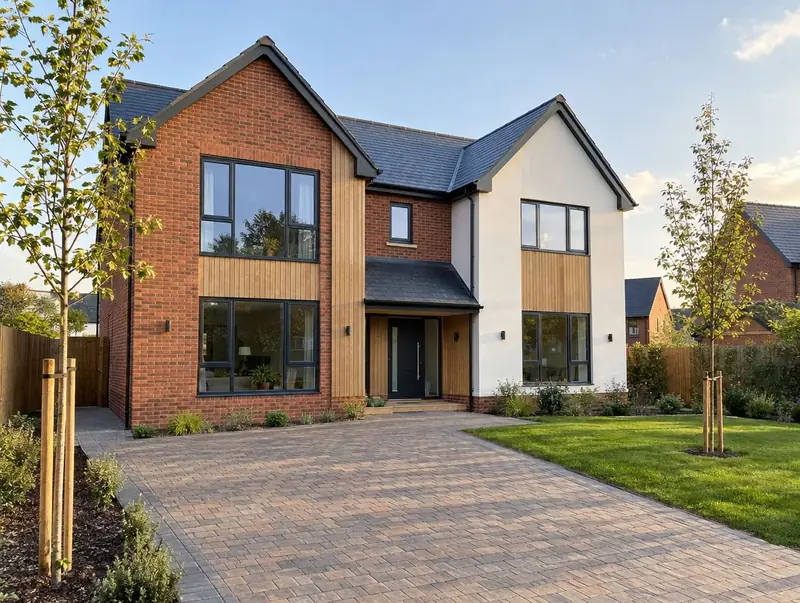
A new build home is a house built from the ground up on a cleared plot, a garden plot or a replacement-dwelling site. We work with plot owners and self-builders to design, gain approvals and build the house, either to a fixed design or from initial ideas.
How much does a new build home cost in Sidcup?
In Sidcup, a new build home typically costs £2,600–£4,150 per m² of floor area (build cost), including VAT at 0% (zero-rated for qualifying new dwellings). For a typical 150 m² project that is roughly £390,000–£622,500. Building costs in London run about 30% above the UK average, and the figures for Sidcup are adjusted to reflect that. Design, structural calculations and council fees are extra.
| Size or type | Guide range |
|---|---|
| Smaller project (105 m²) | £273,000–£436,000 |
| Typical project (150 m²) | £390,000–£622,500 |
| Larger project (210 m²) | £546,000–£871,500 |
| Rate per m² | £2,600–£4,150 |
The main things that change the cost:
- External works and landscaping
- Size and complexity of the house
- Services connections
- Ground conditions and foundations
For a figure based on your own measurements, try the guide price tool, then book a free home visit for a fixed quote.
Do you need planning permission for a new build home in Sidcup?
Before anything is built in Sidcup, we confirm which approvals apply in England. In England a new home needs full planning permission (or permission in principle followed by technical details consent). Councils assess design, access, neighbours and drainage, and the Community Infrastructure Levy may apply, though self-builders can claim an exemption before starting.
Building regulations approval comes from the council’s building control service or a registered building control approver. The work is inspected at key stages, such as foundations, drainage and insulation, and a completion certificate is issued at the end.
If the answer is not clear-cut, we can apply for formal confirmation before you commit to the build.
What we handle
Handled as part of most new build homes:
- Design and planning application
- Internal fit-out and finishes
- Site appraisal and feasibility
- Groundworks, foundations and drainage
- Mechanical and electrical installation
- Superstructure, roof and windows
How long does it take?
Expect 9 to 14 months on site for a typical house. Before that, surveys, drawings and approvals usually take 4 to 9 months, longer if the council asks for changes.
Building in Sidcup
Victorian and Edwardian terraces dominate many London streets, which is why side return, wraparound and mansard projects are so common here.
If your home is in Sidcup or close by in Welling, Eltham and Bexleyheath, a free home visit is the first step.
How it works
- 01
Visit and measured survey
A free visit to understand the project, check access and take measurements.
- 02
Design and pricing
Design options, then a fixed quote based on the chosen drawings and specification.
- 03
Approvals
Planning or permitted development confirmation, building regulations and any party wall matters.
- 04
Build and handover
Work follows the agreed programme, with inspections along the way and a completion certificate at the end.
Questions about new build homes in Sidcup
Who approves a new build home in Sidcup?
Planning matters in Sidcup go to the council covering your address, and the work needs building control approval. We prepare and submit the applications for you.
How long does a new build take?
A typical house takes 9 to 14 months on site after approvals.
Is VAT charged on building a new house?
Construction services for a new dwelling are normally zero-rated when supplied by a VAT-registered builder. Self-builders who buy materials directly can reclaim VAT through HMRC’s DIY housebuilders scheme.
How much does a new build home cost in Sidcup?
In Sidcup, a new build home typically costs £2,600–£4,150 per m² of floor area (build cost), including VAT at 0% (zero-rated for qualifying new dwellings). A typical 150 m² project comes to roughly £390,000–£622,500. Your fixed price depends on the survey and drawings.
Is Community Infrastructure Levy payable?
In areas with CIL, new homes may be liable. Self-builders can apply for an exemption before work starts.