
What is a planning or building regulations application?
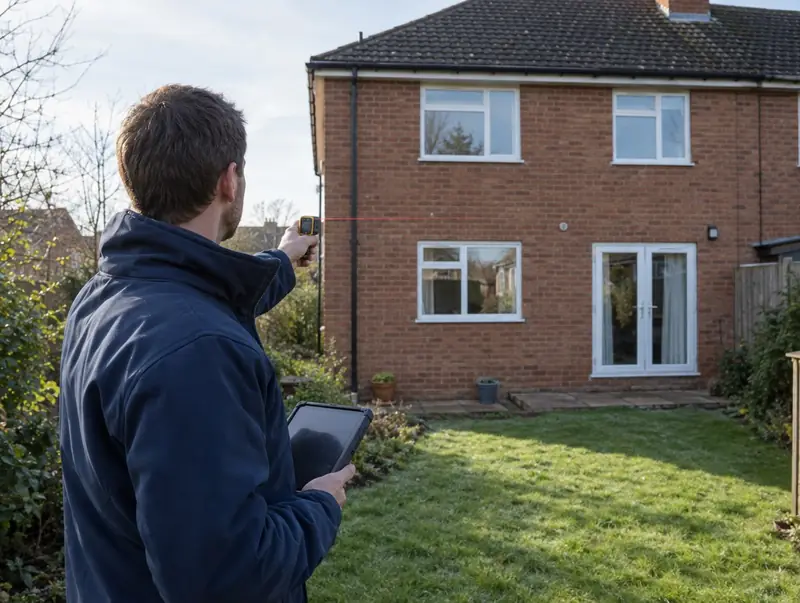
Planning permission decides whether a project can be built; building regulations decide how it must be built. Most extensions, lofts and conversions need building regulations approval even when planning permission is not required.
How much does a planning or building regulations application cost in Alton?
In Alton, a planning or building regulations application typically costs £750–£2,750 for application management (council fees extra), including VAT at 20% (standard rate; planning application fees carry no VAT, council building control fees include VAT). The guide for Alton reflects typical costs in the South East, roughly 12% above the UK-wide figure. Council application fees are extra.
| Size or type | Guide range |
|---|---|
| Application management (council fees extra) | £750–£2,750 |
| Larger or more complex projects | £2,750–£3,500 |
The biggest cost drivers are:
- Council fees
- Type of application
- Building control route
- Planning conditions
A guide range is only a starting point: the guide price tool gives an instant figure for your size, and a free survey turns it into a fixed quote.
Planning and building regulations in Alton
Approvals for a planning or building regulations application in Alton follow the rules for England. In England householder applications, lawful development certificates and prior approvals for larger home extensions go to the local planning authority. Building control can be the council or a registered building control approver.
Building regulations approval comes from the council’s building control service or a registered building control approver. The work is inspected at key stages, such as foundations, drainage and insulation, and a completion certificate is issued at the end.
At the survey we check your house’s planning history and any restrictions, and tell you which route applies.
What we handle
From survey to sign-off, the job normally involves:
- Prior approval (larger home extension) in England
- Building control application and inspections
- Planning or householder applications
- Discharge of planning conditions
- Build-over agreements with the water company
- Permitted development assessment
How long does it take?
Allow about 8 weeks for a householder planning decision (two months in Scotland). If the drawings are for a planning application, add the council’s decision period once they are submitted.
Building in Alton
Commuter towns across the South East have many 1930s and post-war semis that suit rear extensions and hip-to-gable loft conversions.
From GU34 outwards, we take on projects throughout Alton and the surrounding parts of Hampshire.
How it works
- 01
Survey and brief
We visit, talk through what you want and record the existing building.
- 02
Design options
Sketch layouts to agree the approach before detailed drawing starts.
- 03
Drawings and documents
The drawings and forms the council and building control need.
- 04
Submission and follow-up
We submit the application and deal with questions from the council or building control.
Questions about planning and building regulations applications in Alton
How much does a planning or building regulations application cost in Alton?
In Alton, a planning or building regulations application typically costs £750–£2,750 for application management (council fees extra), including VAT at 20% (standard rate; planning application fees carry no VAT, council building control fees include VAT). Your fixed price depends on the survey and drawings.
How long does a planning decision take?
Councils aim to decide most householder applications within 8 weeks.
What happens if I build without approval?
The council can take enforcement action, and missing approvals cause problems when selling. It is always better to get approvals first.
Do you handle planning and building regulations applications in Alton?
Yes. We handle planning and building regulations applications across Alton, including postcodes GU34. Every project starts with a free home visit.
Who carries out building control?
Either the council’s building control service or, in England and Wales, a private building control body registered to do the work. In Scotland and Northern Ireland building control is provided by the council.