
What is a planning or building regulations application?
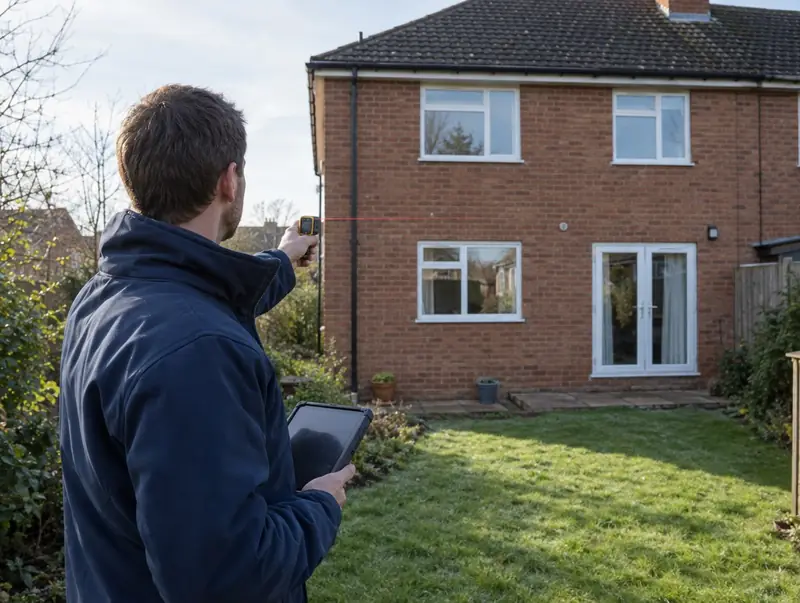
Planning permission decides whether a project can be built; building regulations decide how it must be built. Most extensions, lofts and conversions need building regulations approval even when planning permission is not required.
How much does a planning or building regulations application cost in the Lothians?
In the Lothians, a planning or building regulations application typically costs £750–£2,500 for application management (council fees extra), including VAT at 20% (standard rate; planning application fees carry no VAT, council building control fees include VAT). Building costs in Scotland are close to the UK average, so the figures for the Lothians are close to our national guide. Council application fees are extra.
| Size or type | Guide range |
|---|---|
| Application management (council fees extra) | £750–£2,500 |
| Larger or more complex projects | £2,500–£3,000 |
The main things that change the cost:
- Building control route
- Council fees
- Revisions requested by the council
- Type of application
Use the guide price tool to see how size and specification change the figure, then ask for a written, itemised quote.
Planning and building regulations in the Lothians
Here is how the rules work for a planning or building regulations application in Scotland. In Scotland planning applications and building warrants are both made to the council, and the warrant must be granted before work starts.
Scotland has no Party Wall Act. Work on shared walls is governed by your title deeds, the Tenements (Scotland) Act 2004 for flats, and common law, so we agree arrangements with neighbours in writing before work starts.
If the answer is not clear-cut, we can apply for formal confirmation before you commit to the build.
What we handle
The work we manage on a planning or building regulations application:
- Planning or householder applications
- Written agreement with neighbours on shared walls
- Certificate of lawfulness applications
- Building control application and inspections
- Discharge of planning conditions
- Permitted development assessment
How long does it take?
Allow about 8 weeks for a householder planning decision (two months in Scotland). If the drawings are for a planning application, add the council’s decision period once they are submitted.
Building in the Lothians
Scotland’s housing ranges from sandstone tenements and villas to post-war and modern estates, and the building warrant system shapes how projects are planned.
Towns we cover in the Lothians include Livingston, Musselburgh, Bathgate, Bonnyrigg, Penicuik and Broxburn.
How it works
- 01
Survey and brief
We visit, talk through what you want and record the existing building.
- 02
Design options
Sketch layouts to agree the approach before detailed drawing starts.
- 03
Drawings and documents
The drawings and forms the council and building control need.
- 04
Approval
We follow the application through to a decision and pass on the approved drawings.
Questions about planning and building regulations applications in the Lothians
How much does a planning or building regulations application cost in the Lothians?
In the Lothians, a planning or building regulations application typically costs £750–£2,500 for application management (council fees extra), including VAT at 20% (standard rate; planning application fees carry no VAT, council building control fees include VAT). Your fixed price depends on the survey and drawings.
Do you handle planning and building regulations applications in the Lothians?
Yes. We handle planning and building regulations applications across the Lothians, including postcodes EH10, EH11, EH18, EH19 and EH20. Every project starts with a free home visit.
How long does a planning decision take?
Councils aim to decide most householder applications within 8 weeks.
What about shared walls in the Lothians?
Scotland has no Party Wall Act. Work on shared walls is governed by your title deeds, the Tenements (Scotland) Act 2004 for flats, and common law, so we agree arrangements with neighbours in writing before work starts.
What is a certificate of lawfulness?
A certificate from the council confirming that a project is permitted development. It is optional but useful when selling the house.
What happens if I build without approval?
The council can take enforcement action, and missing approvals cause problems when selling. It is always better to get approvals first.