
What is a small housing development?
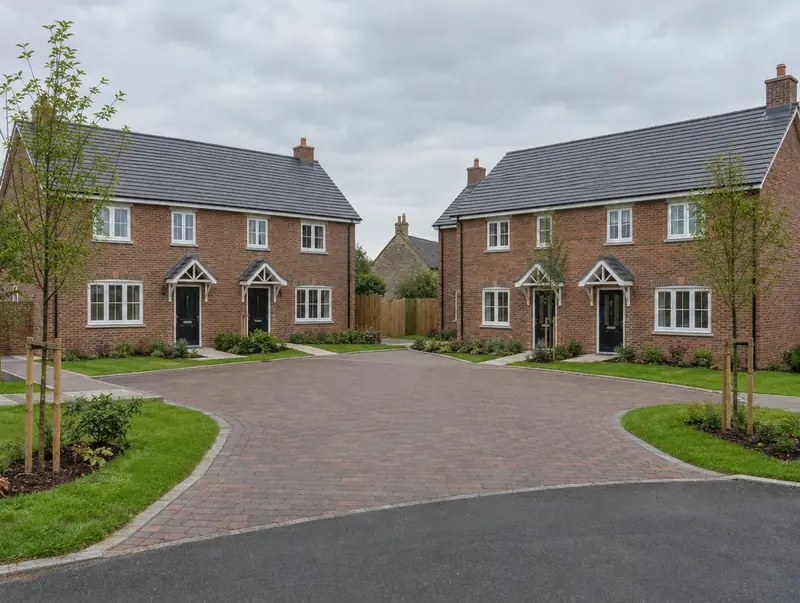
A small housing development is a scheme of a few new homes, typically two to nine, on a single site. We work with landowners, small developers and investors to build schemes that already have planning permission, or help take a site through planning first.
How much does a small housing development cost in Northamptonshire?
In Northamptonshire, a small housing development typically costs £1,700–£2,550 per m² of floor area (build cost), including VAT at 0% (zero-rated for qualifying new dwellings). For a typical 400 m² project that is roughly £680,000–£1,020,000. Prices across the East Midlands are typically 5% below the UK average for this kind of work, which is reflected in the range for Northamptonshire. Design, structural calculations and council fees are extra.
| Size or type | Guide range |
|---|---|
| Smaller project (280 m²) | £476,000–£714,000 |
| Typical project (400 m²) | £680,000–£1,020,000 |
| Larger project (560 m²) | £952,000–£1,428,000 |
| Rate per m² | £1,700–£2,550 |
The main things that change the cost:
- Roads, sewers and adoption agreements
- Planning conditions and obligations
- Ground conditions
- Site access and phasing
Use the guide price tool to see how size and specification change the figure, then ask for a written, itemised quote.
Do you need planning permission for a small housing development in Northamptonshire?
Here is how the rules work for a small housing development in England. In England small schemes need full planning permission and may involve a section 106 agreement, the Community Infrastructure Levy, highways and drainage approvals, and biodiversity net gain where it applies.
Building regulations approval comes from the council’s building control service or a registered building control approver. The work is inspected at key stages, such as foundations, drainage and insulation, and a completion certificate is issued at the end.
If the answer is not clear-cut, we can apply for formal confirmation before you commit to the build.
What we handle
Handled as part of most small housing developments:
- Handover packs for each home
- Utility connections
- Pre-construction cost plan
- Groundworks, roads and drainage
- House construction to building regulations
- Warranty and building control inspections
How long does it take?
Build time is typically 12 to 24 months depending on scheme size. Allow time beforehand for drawings and approvals, usually 6 to 12 months.
Building in Northamptonshire
In the East Midlands, many estates built since the 1960s have integral garages that convert well into a study or bedroom.
Towns we cover in Northamptonshire include Northampton, Corby, Kettering, Wellingborough, Rushden and Daventry.
How it works
- 01
Free visit
We look at the property, talk through what you want and measure up. There is no charge and no obligation.
- 02
Drawings and written quote
We prepare the design and give you a written, itemised quote with inclusions and exclusions.
- 03
Approvals
Planning or permitted development confirmation, building regulations and any party wall matters.
- 04
Construction and completion
We build, put right any snags and hand over the building control certificate.
Questions about small housing developments in Northamptonshire
How long does a small housing development take in Northamptonshire?
Typically 12 to 24 months depending on scheme size. Design and approvals beforehand usually take 6 to 12 months.
How much does a small housing development cost in Northamptonshire?
In Northamptonshire, a small housing development typically costs £1,700–£2,550 per m² of floor area (build cost), including VAT at 0% (zero-rated for qualifying new dwellings). A typical 400 m² project comes to roughly £680,000–£1,020,000. Your fixed price depends on the survey and drawings.
Who handles road adoption?
We build roads and sewers to adoptable standards where agreements are in place with the highway authority and water company.
Do you work with landowners?
Yes. If you own land, with or without planning permission, we can discuss building on it with you.
What about biodiversity net gain?
In England, biodiversity net gain rules apply to many developments, with exemptions for some small sites. We work with your ecologist to confirm what applies to your scheme.