
What is a small housing development?
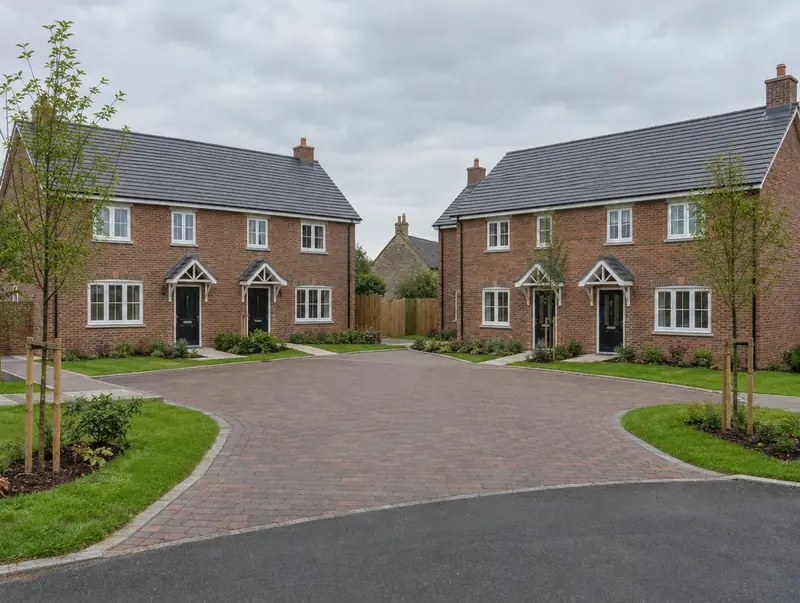
A small housing development is a scheme of a few new homes, typically two to nine, on a single site. We work with landowners, small developers and investors to build schemes that already have planning permission, or help take a site through planning first.
How much does a small housing development cost in Rawtenstall?
In Rawtenstall, a small housing development typically costs £1,700–£2,550 per m² of floor area (build cost), including VAT at 0% (zero-rated for qualifying new dwellings). For a typical 400 m² project that is roughly £680,000–£1,020,000. Prices across the North West are typically 6% below the UK average for this kind of work, which is reflected in the range for Rawtenstall. Design, structural calculations and council fees are extra.
| Size or type | Guide range |
|---|---|
| Smaller project (280 m²) | £476,000–£714,000 |
| Typical project (400 m²) | £680,000–£1,020,000 |
| Larger project (560 m²) | £952,000–£1,428,000 |
| Rate per m² | £1,700–£2,550 |
Your quote will depend mainly on:
- Planning conditions and obligations
- Number and size of homes
- Roads, sewers and adoption agreements
- Ground conditions
Use the guide price tool to see how size and specification change the figure, then ask for a written, itemised quote.
Do you need planning permission for a small housing development in Rawtenstall?
Here is how the rules work for a small housing development in England. In England small schemes need full planning permission and may involve a section 106 agreement, the Community Infrastructure Levy, highways and drainage approvals, and biodiversity net gain where it applies.
Building regulations approval comes from the council’s building control service or a registered building control approver. The work is inspected at key stages, such as foundations, drainage and insulation, and a completion certificate is issued at the end.
At the survey we check your house’s planning history and any restrictions, and tell you which route applies.
What we handle
Handled as part of most small housing developments:
- Handover packs for each home
- Utility connections
- Pre-construction cost plan
- Design development and discharge of conditions
- House construction to building regulations
- Groundworks, roads and drainage
How long does it take?
Expect 12 to 24 months depending on scheme size. Design and approvals come first and typically take 6 to 12 months, depending on the approval route.
Building in Rawtenstall
The North West has many brick terraces and inter-war semis, where kitchen extensions and dormer loft conversions add space without moving.
Our Rawtenstall coverage includes postcode districts BB4, and we also work in nearby places such as Rossendale, Accrington and Bury.
How it works
- 01
Survey and brief
We visit, discuss your ideas and budget, and survey the property or site at no cost.
- 02
Design and fixed quote
Drawings, structural calculations and an itemised, fixed price for the agreed specification.
- 03
Permissions sorted
Applications, building control and neighbour arrangements, all before the start date.
- 04
Build and sign-off
We run the build to a written programme and hand over the completion certificate.
Questions about small housing developments in Rawtenstall
Is VAT charged on new homes?
Construction of qualifying new dwellings is normally zero-rated for VAT.
Do you build small housing developments in Rawtenstall?
Yes. We build small housing developments across Rawtenstall, including postcodes BB4. Every project starts with a free home visit.
How much does a small housing development cost in Rawtenstall?
In Rawtenstall, a small housing development typically costs £1,700–£2,550 per m² of floor area (build cost), including VAT at 0% (zero-rated for qualifying new dwellings). A typical 400 m² project comes to roughly £680,000–£1,020,000. Your fixed price depends on the survey and drawings.
How long does a small development take?
Typically 12 to 24 months on site, depending on size and phasing.
Who handles road adoption?
We build roads and sewers to adoptable standards where agreements are in place with the highway authority and water company.