
What is a wraparound extension?
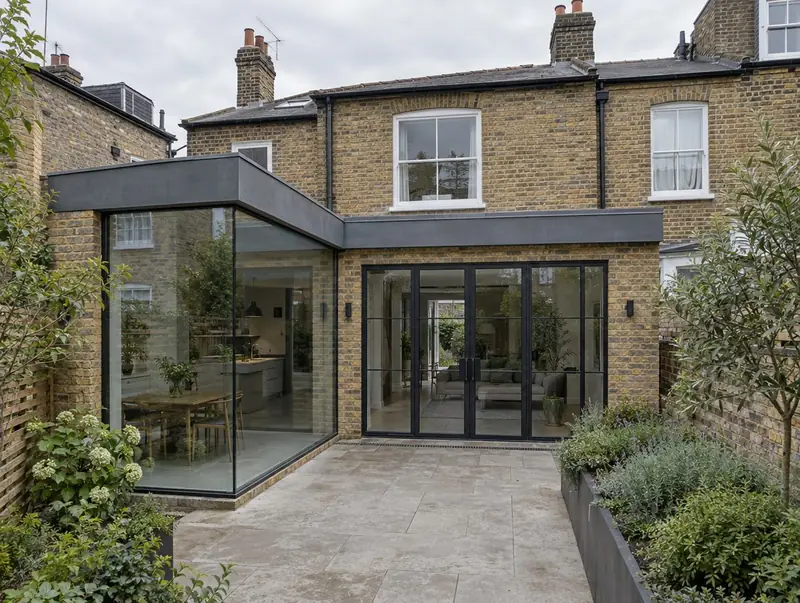
A wraparound extension combines a side return and a rear extension into one L-shaped addition. It gives the largest possible ground floor, often creating an open-plan kitchen, dining and living space across the whole width of the house.
How much does a wraparound extension cost in Hayes?
In Hayes, a wraparound extension typically costs £2,850–£4,150 per m² of floor area, including VAT at 20% (standard rate). For a typical 28 m² project that is roughly £80,000–£116,000. Prices across London are typically 30% above the UK average for this kind of work, which is reflected in the range for Hayes. Design, structural calculations and council fees are extra.
| Size or type | Guide range |
|---|---|
| Smaller project (20 m²) | £57,000–£83,000 |
| Typical project (28 m²) | £80,000–£116,000 |
| Larger project (39 m²) | £111,000–£162,000 |
| Rate per m² | £2,850–£4,150 |
The main things that change the cost:
- Drainage changes
- Kitchen and flooring specification
- Steelwork and propping of the existing house
- Total footprint and the amount of glazing
Use the guide price tool to see how size and specification change the figure, then ask for a written, itemised quote.
Do you need planning permission for a wraparound extension in Hayes?
The approval route for Hayes is set by planning law in England. In England a wraparound extension combines side and rear elements, which normally takes it outside permitted development, so a householder planning application is made.
Where work involves a shared wall, building on the boundary, or digging foundations within 3 metres of a neighbour’s building and deeper than its foundations (or within 6 metres for deeper work), the Party Wall etc. Act 1996 applies and notices must be served before work starts.
We check this for your address before design work starts, so there are no surprises later.
What we handle
What we take care of:
- Party wall notices and surveyor liaison
- Foundations and drainage
- Walls, roof and glazing
- Building control completion
- Removal of internal and external walls
- Underfloor heating option, electrics and plastering
How long does it take?
The build itself usually takes 12 to 18 weeks on site. Before that, surveys, drawings and approvals usually take 3 to 4 months, longer if the council asks for changes.
Building in Hayes
Victorian and Edwardian terraces dominate many London streets, which is why side return, wraparound and mansard projects are so common here.
If your home is in Hayes or close by in Richmond, Chiswick and Barnes, a free home visit is the first step.
How it works
- 01
Visit and measured survey
A free visit to understand the project, check access and take measurements.
- 02
Design and fixed quote
Drawings, structural calculations and an itemised, fixed price for the agreed specification.
- 03
Permissions sorted
Applications, building control and neighbour arrangements, all before the start date.
- 04
Construction and completion
We build, put right any snags and hand over the building control certificate.
Questions about wraparound extensions in Hayes
Who approves a wraparound extension in Hayes?
Planning matters in Hayes go to the council covering your address, and the work needs building control approval. We prepare and submit the applications for you.
Will both neighbours be affected?
Usually only the neighbour on the side return side, but rear foundations near either boundary can trigger party wall notices.
How much does a wraparound extension cost in Hayes?
In Hayes, a wraparound extension typically costs £2,850–£4,150 per m² of floor area, including VAT at 20% (standard rate). A typical 28 m² project comes to roughly £80,000–£116,000. Your fixed price depends on the survey and drawings.
Is a wraparound worth it?
It gives the biggest ground-floor space without going upwards. Whether it adds value depends on your street and house, so we suggest checking local sale prices before committing.
How long does it take to build?
Around 12 to 18 weeks on site after approvals. Design, planning and party wall matters usually take 3 to 4 months beforehand.