
What is a barn conversion?
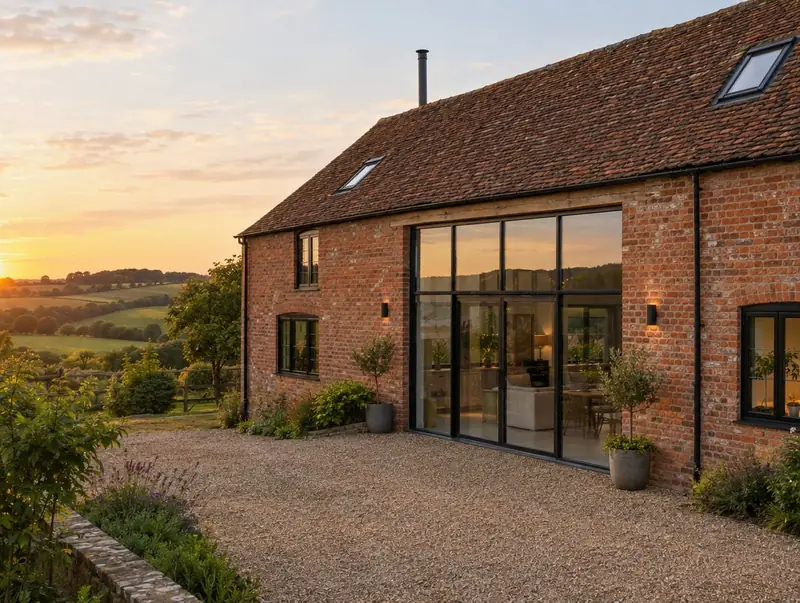
A barn conversion turns an agricultural or rural building into a home while keeping its character: the brick or stone walls, roof timbers and large openings. It involves structural repair, insulation, new services and often a new floor slab.
How much does a barn conversion cost in Gosport?
In Gosport, a barn conversion typically costs £2,000–£3,350 per m² of floor area, including VAT at usually 5% (reduced rate for creating a new dwelling). For a typical 150 m² project that is roughly £300,000–£502,500. Building costs in the South East run about 12% above the UK average, and the figures for Gosport are adjusted to reflect that. Design, structural calculations and council fees are extra.
| Size or type | Guide range |
|---|---|
| Smaller project (105 m²) | £210,000–£352,000 |
| Typical project (150 m²) | £300,000–£502,500 |
| Larger project (210 m²) | £420,000–£703,500 |
| Rate per m² | £2,000–£3,350 |
What moves the price most:
- Access to the site
- Condition of the existing structure
- Services and drainage
- Glazing and finishes
For a figure based on your own measurements, try the guide price tool, then book a free home visit for a fixed quote.
Do you need planning permission for a barn conversion in Gosport?
The approval route for Gosport is set by planning law in England. In England converting an agricultural building into a home needs either full planning permission or prior approval under Class Q of the permitted development rules, which limits floor space and the number of homes. Listed barns also need listed building consent.
Building regulations approval comes from the council’s building control service or a registered building control approver. The work is inspected at key stages, such as foundations, drainage and insulation, and a completion certificate is issued at the end.
If the answer is not clear-cut, we can apply for formal confirmation before you commit to the build.
What we handle
From survey to sign-off, the job normally involves:
- Insulation that respects the existing fabric
- Services, drainage and septic or treatment plant
- Building control completion
- Ecology and bat survey coordination
- Planning or prior approval application
- Structural survey and feasibility
How long does it take?
Build time is typically 6 to 12 months on site depending on condition. Allow time beforehand for drawings and approvals, usually 4 to 9 months.
Building in Gosport
The South East has a broad mix of housing, from Victorian terraces in the towns to post-war semis and newer estates, so extension types vary street by street.
Projects in Gosport (PO12) are surveyed in person before we quote, so the price reflects your actual property.
How it works
- 01
Visit and measured survey
A free visit to understand the project, check access and take measurements.
- 02
Design and fixed quote
Drawings, structural calculations and an itemised, fixed price for the agreed specification.
- 03
Approvals
Planning or permitted development confirmation, building regulations and any party wall matters.
- 04
Construction and completion
We build, put right any snags and hand over the building control certificate.
Questions about barn conversions in Gosport
Who approves a barn conversion in Gosport?
Planning matters in Gosport go to the council covering your address, and the work needs building control approval. We prepare and submit the applications for you.
How long does a barn conversion take?
Typically 6 to 12 months on site, depending on the building’s condition.
Is VAT reduced on a barn conversion?
Usually yes. Converting a non-residential building into a dwelling normally qualifies for the reduced 5% VAT rate on building work. Our guide prices assume this rate.
How much does a barn conversion cost in Gosport?
In Gosport, a barn conversion typically costs £2,000–£3,350 per m² of floor area, including VAT at usually 5% (reduced rate for creating a new dwelling). A typical 150 m² project comes to roughly £300,000–£502,500. Your fixed price depends on the survey and drawings.
What about drainage without mains sewer?
A sewage treatment plant can be installed, subject to the environmental regulator’s rules where you live.