
What is a bungalow loft conversion?
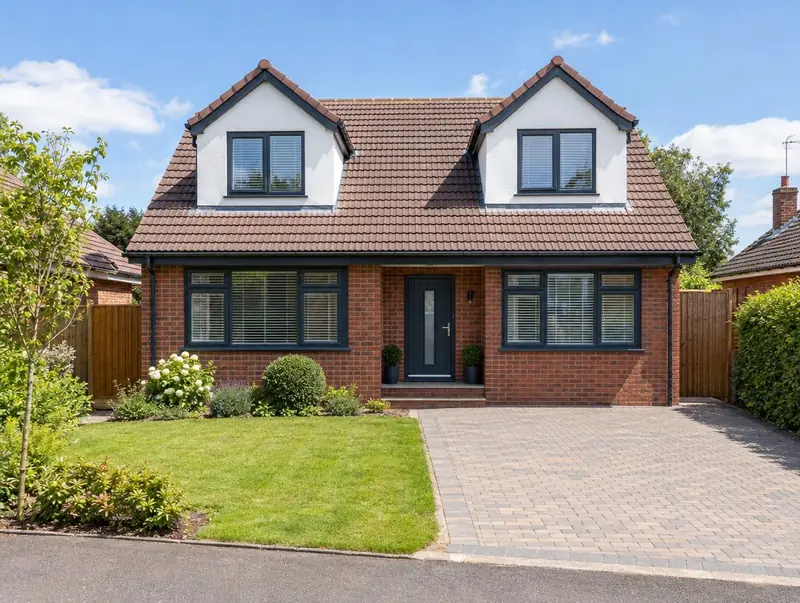
A bungalow loft conversion uses the large roof space of a bungalow to add bedrooms and a bathroom, turning it into a chalet bungalow. Dormers at the front, rear or both create headroom; some projects raise the roof entirely.
How much does a bungalow loft conversion cost in Alloa?
In Alloa, a bungalow loft conversion typically costs £43,500–£77,500 for a typical bungalow conversion with dormers, including VAT at 20% (standard rate). Prices in Scotland sit near the national average for this kind of work, and the range for Alloa reflects that. Design, structural calculations and council fees are extra.
| Size or type | Guide range |
|---|---|
| A typical bungalow conversion with dormers | £43,500–£77,500 |
| Higher specification | £77,500–£97,000 |
What moves the price most:
- Whether the roof is raised
- Number and size of dormers
- Bathrooms
- Fire escape design
Your exact price depends on the survey and drawings. The guide price tool gives a quick range in the meantime.
Do you need planning permission for a bungalow loft conversion in Alloa?
Here is how the rules work for a bungalow loft conversion in Scotland. In Scotland dormers on a bungalow are permitted development only on a roof slope that does not face a road and is at least 10 metres from the boundary it faces, no wider than half the roof. Front dormers and roof raises need planning permission, and a building warrant is needed before work starts.
Scotland has no Party Wall Act. Work on shared walls is governed by your title deeds, the Tenements (Scotland) Act 2004 for flats, and common law, so we agree arrangements with neighbours in writing before work starts.
At the survey we check your house’s planning history and any restrictions, and tell you which route applies.
What we handle
Handled as part of most bungalow loft conversions:
- Building control sign-off
- Bathroom installation
- Survey and planning check
- New floor structure and staircase
- Fire-safe escape windows or route
- Insulation, electrics, plumbing and plastering
How long does it take?
Expect 8 to 14 weeks on site. Design and approvals come first and typically take 3 to 4 months, depending on the approval route.
Building in Alloa
In Scotland, bungalows and one-and-a-half-storey homes are common, so dormer conversions are a popular way to add bedrooms.
Projects in Alloa (FK10) are surveyed in person before we quote, so the price reflects your actual property.
How it works
- 01
Survey and brief
We visit, discuss your ideas and budget, and survey the property or site at no cost.
- 02
Design and pricing
Design options, then a fixed quote based on the chosen drawings and specification.
- 03
Approvals in place
We handle planning, building control and neighbour notices before work starts.
- 04
Build and sign-off
We run the build to a written programme and hand over the completion certificate.
Questions about bungalow loft conversions in Alloa
Is fire escape easier in a bungalow?
For a single new floor, escape windows may be acceptable instead of a fully protected stairway. Building control confirms the approach.
Where does the staircase go?
Usually from the hallway or a bedroom that becomes a landing. Losing a little ground-floor space is normal.
How long does a bungalow loft conversion take in Alloa?
Typically 8 to 14 weeks on site. Design and approvals beforehand usually take 3 to 4 months.
How much does a bungalow loft conversion cost in Alloa?
In Alloa, a bungalow loft conversion typically costs £43,500–£77,500 for a typical bungalow conversion with dormers, including VAT at 20% (standard rate). Your fixed price depends on the survey and drawings.
Will the bungalow still be valued as a bungalow?
It becomes a chalet bungalow. Whether that adds value depends on local demand.
Do I need planning permission for a bungalow loft conversion in Alloa?
In Scotland dormers on a bungalow are permitted development only on a roof slope that does not face a road and is at least 10 metres from the boundary it faces, no wider than half the roof. Front dormers and roof raises need planning permission, and a building warrant is needed before work starts.