
What is a hip-to-gable loft conversion?
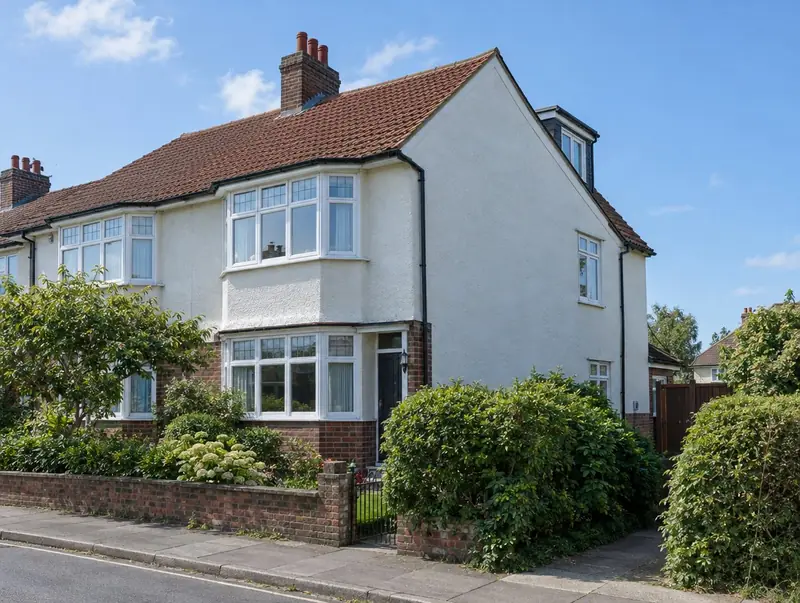
A hip-to-gable loft conversion replaces the sloping side (the hip) of a semi-detached or detached roof with a vertical gable wall. This extends the ridge and creates enough space for a staircase and a full-size room, usually combined with a rear dormer.
How much does a hip-to-gable loft conversion cost in Lincolnshire?
In Lincolnshire, a hip-to-gable loft conversion typically costs £52,000–£74,000 for a hip-to-gable with rear dormer, including VAT at 20% (standard rate). We start from a UK-wide guide and adjust it for the East Midlands, where labour and materials are typically about 5% below average. Design, structural calculations and council fees are extra.
| Size or type | Guide range |
|---|---|
| A hip-to-gable with rear dormer | £52,000–£74,000 |
| Higher specification | £74,000–£92,500 |
The biggest cost drivers are:
- Size of the rear dormer
- Bathroom and plumbing
- Staircase design
- Roof tile matching
Your exact price depends on the survey and drawings. The guide price tool gives a quick range in the meantime.
Do you need planning permission for a hip-to-gable loft conversion in Lincolnshire?
Here is how the rules work for a hip-to-gable loft conversion in England. In England a hip-to-gable conversion is often permitted development within the 50 cubic metre roof volume limit for semi-detached and detached houses, provided the gable does not face a road and the house is not in a conservation area.
Building regulations approval comes from the council’s building control service or a registered building control approver. The work is inspected at key stages, such as foundations, drainage and insulation, and a completion certificate is issued at the end.
If the answer is not clear-cut, we can apply for formal confirmation before you commit to the build.
What we handle
The work we manage on a hip-to-gable loft conversion:
- Drawings and structural calculations
- Roof extension and rear dormer
- Steel beams and floor joists
- Gable wall built in brick or block and finished to match
- Insulation, electrics, plumbing and plastering
- Survey and planning check
How long does it take?
Allow 7 to 10 weeks on site. Design and approvals come first and typically take 6 to 12 weeks, depending on the approval route.
Building in Lincolnshire
In the East Midlands, many estates built since the 1960s have integral garages that convert well into a study or bedroom.
Towns we cover in Lincolnshire include Lincoln, Grimsby, Scunthorpe, Boston, Grantham and Cleethorpes.
How it works
- 01
Free visit
We look at the property, talk through what you want and measure up. There is no charge and no obligation.
- 02
Design and fixed quote
Drawings, structural calculations and an itemised, fixed price for the agreed specification.
- 03
Approvals in place
We handle planning, building control and neighbour notices before work starts.
- 04
Build and sign-off
We run the build to a written programme and hand over the completion certificate.
Questions about hip-to-gable loft conversions in Lincolnshire
Who approves a hip-to-gable loft conversion in Lincolnshire?
Planning matters in Lincolnshire go to the council covering your address, and the work needs building control approval. We prepare and submit the applications for you.
Is a hip-to-gable better than a dormer?
On a hipped roof, a dormer alone often leaves too little space for stairs. Combining hip-to-gable with a rear dormer gives the most room.
How much does a hip-to-gable loft conversion cost in Lincolnshire?
In Lincolnshire, a hip-to-gable loft conversion typically costs £52,000–£74,000 for a hip-to-gable with rear dormer, including VAT at 20% (standard rate). Your fixed price depends on the survey and drawings.
Will I need building regulations approval?
Yes. All loft conversions to habitable rooms need building control approval for structure, fire safety, insulation and stairs.
Is a hip-to-gable conversion permitted development?
Often yes in England, within the 50 cubic metre roof volume limit for semi-detached and detached houses. It is not permitted development in conservation areas or where rights have been removed.