
What is a house renovation?
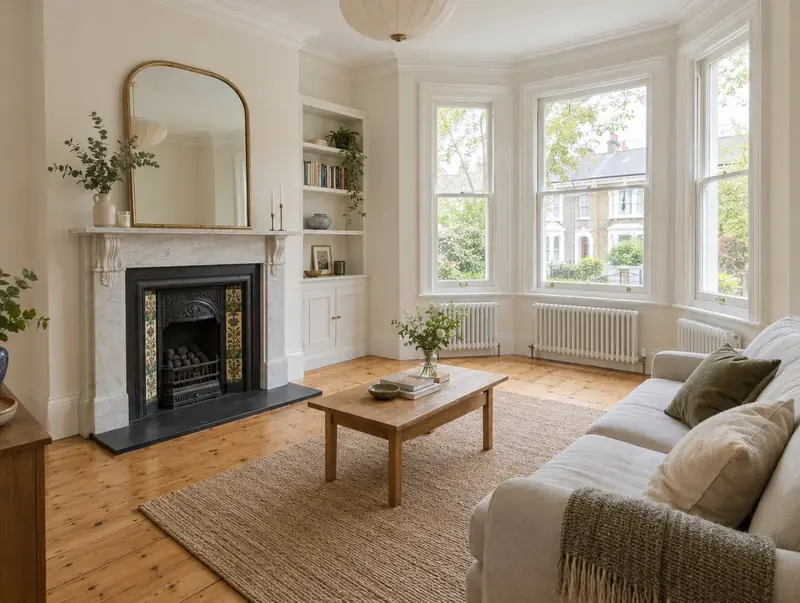
A house renovation brings an older or tired home up to date. It can include rewiring, a new heating system, replastering, new floors, windows, kitchens and bathrooms, and changes to the layout. A full renovation is often combined with an extension or loft conversion.
How much does a house renovation cost in Cambridge?
In Cambridge, a house renovation typically costs £950–£1,900 per m² for a medium to full renovation, including VAT at 20% (5% may apply to homes empty for two years or more). For a typical 90 m² project that is roughly £85,500–£171,000. Building costs in the East of England run about 6% above the UK average, and the figures for Cambridge are adjusted to reflect that. Design, structural calculations and council fees are extra.
| Size or type | Guide range |
|---|---|
| Smaller project (63 m²) | £60,000–£119,500 |
| Typical project (90 m²) | £85,500–£171,000 |
| Larger project (126 m²) | £119,500–£239,500 |
| Rate per m² | £950–£1,900 |
What moves the price most:
- Structural and damp repairs
- Kitchens and bathrooms
- Whether you live in during the work
- Finishes
For a figure based on your own measurements, try the guide price tool, then book a free home visit for a fixed quote.
Do you need planning permission for a house renovation in Cambridge?
Whether you need planning permission depends on your house and its location in England. In England internal renovation usually does not need planning permission unless the house is listed, when listed building consent covers internal work too. Notifiable work such as rewiring, structural changes, new windows and heating must meet building regulations.
Where work involves a shared wall, building on the boundary, or digging foundations within 3 metres of a neighbour’s building and deeper than its foundations (or within 6 metres for deeper work), the Party Wall etc. Act 1996 applies and notices must be served before work starts.
At the survey we check your house’s planning history and any restrictions, and tell you which route applies.
What we handle
What we take care of:
- Joinery, doors and floors
- Building control for notifiable work
- Structural repairs and damp treatment
- Kitchens and bathrooms
- Rewiring and heating upgrades
- Condition survey and scope of works
How long does it take?
Expect 8 to 20 weeks on site depending on scope. Before that, surveys, drawings and approvals usually take 6 to 12 weeks, longer if the council asks for changes.
Building in Cambridge
Across the East of England, 1930s and post-war semis, newer estates and rural cottages all feature, each with different extension and loft options.
From CB5 outwards, we take on projects throughout Cambridge and the surrounding parts of Cambridgeshire.
How it works
- 01
Visit and measured survey
A free visit to understand the project, check access and take measurements.
- 02
Design and pricing
Design options, then a fixed quote based on the chosen drawings and specification.
- 03
Approvals in place
We handle planning, building control and neighbour notices before work starts.
- 04
Build and handover
Work follows the agreed programme, with inspections along the way and a completion certificate at the end.
Questions about house renovations in Cambridge
Do you renovate listed buildings?
Yes, with listed building consent and appropriate materials.
Can I live in the house during a renovation?
For light work, yes. For a full renovation, most clients move out for some or all of the job.
How much does a house renovation cost in Cambridge?
In Cambridge, a house renovation typically costs £950–£1,900 per m² for a medium to full renovation, including VAT at 20% (5% may apply to homes empty for two years or more). A typical 90 m² project comes to roughly £85,500–£171,000. Your fixed price depends on the survey and drawings.
How long does a house renovation take in Cambridge?
Typically 8 to 20 weeks on site depending on scope. Design and approvals beforehand usually take 6 to 12 weeks.
Is VAT reduced on renovations?
Usually not; the standard 20% rate applies. A reduced 5% rate can apply when renovating a home that has been empty for at least two years.