
What is a mansard loft conversion?
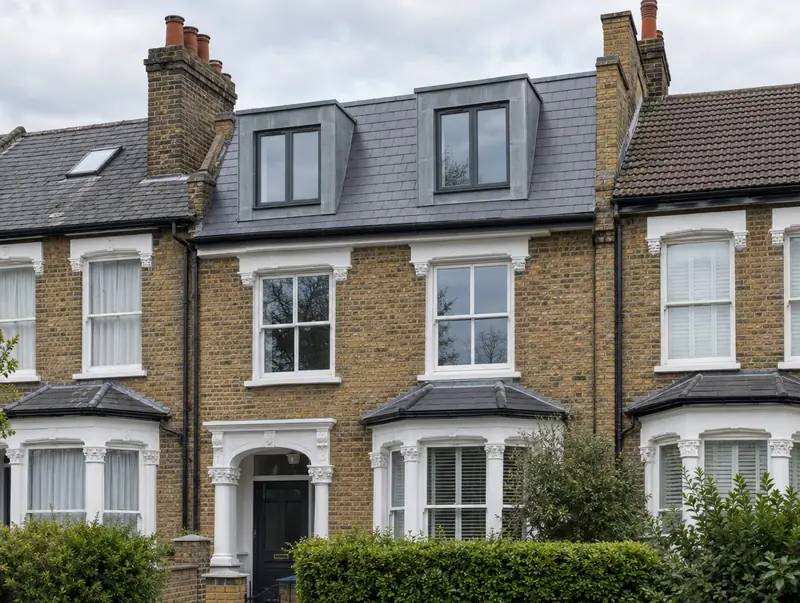
A mansard loft conversion rebuilds the roof with a nearly vertical slope (about 72 degrees) and a flat top, effectively adding a new storey. Small dormer windows sit within the steep slope. Mansards are common on period terraces in towns and cities.
How much does a mansard loft conversion cost in Renfrewshire and Inverclyde?
In Renfrewshire and Inverclyde, a mansard loft conversion typically costs £63,000–£92,000 for a typical rear mansard, including VAT at 20% (standard rate). Prices in Scotland sit near the national average for this kind of work, and the range for Renfrewshire and Inverclyde reflects that. Design, structural calculations and council fees are extra.
| Size or type | Guide range |
|---|---|
| A typical rear mansard | £63,000–£92,000 |
| Higher specification | £92,000–£115,000 |
The main things that change the cost:
- Agreements with neighbours on shared walls
- Bathrooms and finishes
- Roof covering: natural slate costs more
- Front, rear or both
Use the guide price tool to see how size and specification change the figure, then ask for a written, itemised quote.
Do you need planning permission for a mansard loft conversion in Renfrewshire and Inverclyde?
Before anything is built in Renfrewshire and Inverclyde, we confirm which approvals apply in Scotland. In Scotland a mansard needs planning permission and a building warrant.
In Scotland a building warrant is needed before work starts on most extensions, loft conversions and conversions. It is issued by the council’s building standards service. When the work is finished, a completion certificate is submitted and accepted by the council after inspection.
At the survey we check your house’s planning history and any restrictions, and tell you which route applies.
What we handle
Handled as part of most mansard loft conversions:
- Dormer windows
- Insulation, electrics, plumbing and plastering
- New roof structure, slate or tile covering and lead work
- Staircase and fire-safe escape route
- Structural design and calculations
- Planning drawings and application
How long does it take?
Expect 9 to 12 weeks on site, after planning approval. Design and approvals come first and typically take 3 to 4 months, depending on the approval route.
Building in Renfrewshire and Inverclyde
In Scotland, bungalows and one-and-a-half-storey homes are common, so dormer conversions are a popular way to add bedrooms.
Towns we cover in Renfrewshire and Inverclyde include Paisley, Greenock, Newton Mearns, Renfrew, Barrhead and Johnstone.
How it works
- 01
Survey and brief
We visit, discuss your ideas and budget, and survey the property or site at no cost.
- 02
Drawings and written quote
We prepare the design and give you a written, itemised quote with inclusions and exclusions.
- 03
Permissions sorted
Applications, building control and neighbour arrangements, all before the start date.
- 04
Construction and completion
We build, put right any snags and hand over the building control certificate.
Questions about mansard loft conversions in Renfrewshire and Inverclyde
Do I need planning permission for a mansard loft conversion in Renfrewshire and Inverclyde?
In Scotland a mansard needs planning permission and a building warrant.
Why choose a mansard over a dormer?
A mansard gives more usable floor space and a neater appearance from the street, but costs more and needs planning permission.
How much does a mansard loft conversion cost in Renfrewshire and Inverclyde?
In Renfrewshire and Inverclyde, a mansard loft conversion typically costs £63,000–£92,000 for a typical rear mansard, including VAT at 20% (standard rate). Your fixed price depends on the survey and drawings.
Can I stay at home?
Usually. The new roof is built under a temporary cover so the house stays dry.
Who approves a mansard loft conversion in Renfrewshire and Inverclyde?
Planning matters in Renfrewshire and Inverclyde go to the council covering your address, and the work needs a building warrant. We prepare and submit the applications for you.
What roof covering is used?
Natural slate is traditional; some councils accept other materials. We follow local guidance.