
What is a new build home?
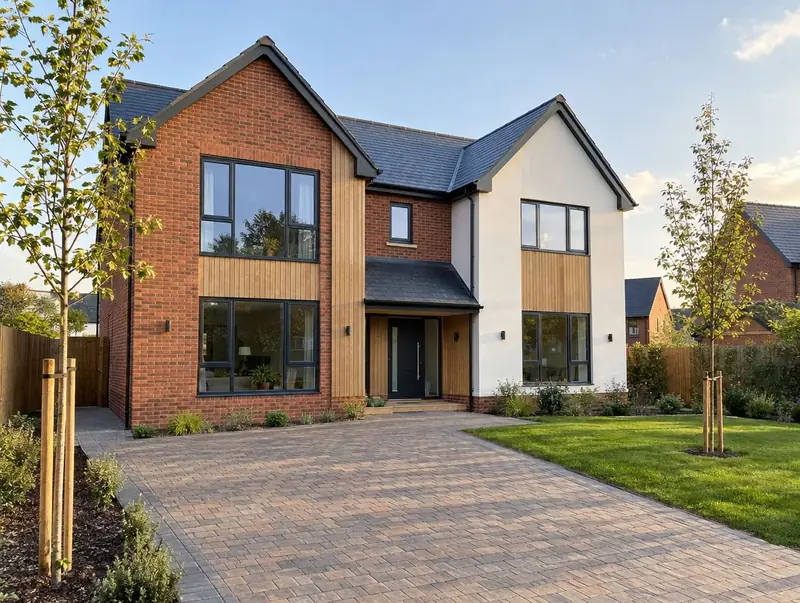
A new build home is a house built from the ground up on a cleared plot, a garden plot or a replacement-dwelling site. We work with plot owners and self-builders to design, gain approvals and build the house, either to a fixed design or from initial ideas.
How much does a new build home cost in Portadown?
In Portadown, a new build home typically costs £1,700–£2,750 per m² of floor area (build cost), including VAT at 0% (zero-rated for qualifying new dwellings). For a typical 150 m² project that is roughly £255,000–£412,500. We start from a UK-wide guide and adjust it for Northern Ireland, where labour and materials are typically about 14% below average. Design, structural calculations and council fees are extra.
| Size or type | Guide range |
|---|---|
| Smaller project (105 m²) | £178,500–£289,000 |
| Typical project (150 m²) | £255,000–£412,500 |
| Larger project (210 m²) | £357,000–£577,500 |
| Rate per m² | £1,700–£2,750 |
The main things that change the cost:
- Services connections
- Ground conditions and foundations
- Size and complexity of the house
- Specification and energy systems
Use the guide price tool to see how size and specification change the figure, then ask for a written, itemised quote.
Do you need planning permission for a new build home in Portadown?
Here is how the rules work for a new build home in Northern Ireland. In Northern Ireland a new home needs planning permission from the council and building control approval.
In Northern Ireland building control approval comes from the council, usually through a full plans application or a building notice, with inspections during the work and a completion certificate at the end.
We check this for your address before design work starts, so there are no surprises later.
What we handle
From survey to sign-off, the job normally involves:
- Building control completion and warranty liaison
- Design and planning application
- Internal fit-out and finishes
- Mechanical and electrical installation
- Site appraisal and feasibility
- Groundworks, foundations and drainage
How long does it take?
Allow 9 to 14 months on site for a typical house. Allow time beforehand for drawings and approvals, usually 4 to 9 months.
Building in Portadown
Across Northern Ireland, bungalows and chalet bungalows are common, so loft conversions and rear extensions are popular projects.
We work across Portadown and neighbouring areas such as Craigavon, Banbridge and Armagh. Postcodes we cover in Portadown include BT62 and BT63.
How it works
- 01
Free visit
We look at the property, talk through what you want and measure up. There is no charge and no obligation.
- 02
Design and pricing
Design options, then a fixed quote based on the chosen drawings and specification.
- 03
Approvals in place
We handle planning, building control and neighbour notices before work starts.
- 04
Build and handover
Work follows the agreed programme, with inspections along the way and a completion certificate at the end.
Questions about new build homes in Portadown
How long does a new build home take in Portadown?
Typically 9 to 14 months on site for a typical house. Design and approvals beforehand usually take 4 to 9 months.
Do I need planning permission for a new build home in Portadown?
In Northern Ireland a new home needs planning permission from the council and building control approval.
Can you build to my architect’s design?
Yes. We price and build from your drawings, or we can manage the design for you.
How much does a new build home cost in Portadown?
In Portadown, a new build home typically costs £1,700–£2,750 per m² of floor area (build cost), including VAT at 0% (zero-rated for qualifying new dwellings). A typical 150 m² project comes to roughly £255,000–£412,500. Your fixed price depends on the survey and drawings.
What warranty will a new home need?
Lenders usually require a structural warranty or a professional consultant’s certificate. The warranty is arranged before work starts, and the provider inspects the build at key stages.
Is Community Infrastructure Levy payable?
In areas with CIL, new homes may be liable. Self-builders can apply for an exemption before work starts.