
What is a new build home?
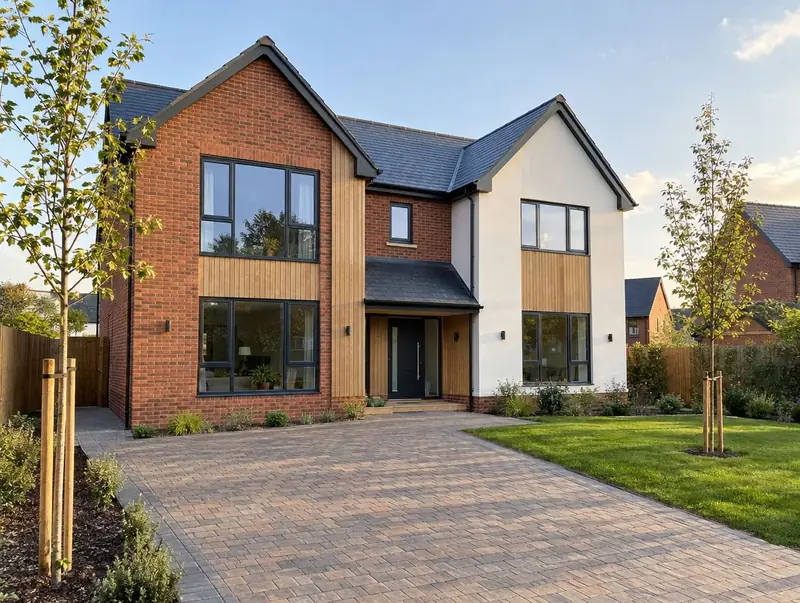
A new build home is a house built from the ground up on a cleared plot, a garden plot or a replacement-dwelling site. We work with plot owners and self-builders to design, gain approvals and build the house, either to a fixed design or from initial ideas.
How much does a new build home cost in the Lothians?
In the Lothians, a new build home typically costs £1,950–£3,100 per m² of floor area (build cost), including VAT at 0% (zero-rated for qualifying new dwellings). For a typical 150 m² project that is roughly £292,500–£465,000. Building costs in Scotland are close to the UK average, so the figures for the Lothians are close to our national guide. Design, structural calculations and council fees are extra.
| Size or type | Guide range |
|---|---|
| Smaller project (105 m²) | £205,000–£325,500 |
| Typical project (150 m²) | £292,500–£465,000 |
| Larger project (210 m²) | £409,500–£651,000 |
| Rate per m² | £1,950–£3,100 |
The main things that change the cost:
- Specification and energy systems
- Size and complexity of the house
- Site access and demolition
- Ground conditions and foundations
Your exact price depends on the survey and drawings. The guide price tool gives a quick range in the meantime.
Do you need planning permission for a new build home in the Lothians?
The approval route for the Lothians is set by planning law in Scotland. In Scotland a new home needs planning permission and a building warrant before work starts.
In Scotland a building warrant is needed before work starts on most extensions, loft conversions and conversions. It is issued by the council’s building standards service. When the work is finished, a completion certificate is submitted and accepted by the council after inspection.
We check this for your address before design work starts, so there are no surprises later.
What we handle
Handled as part of most new build homes:
- Groundworks, foundations and drainage
- Internal fit-out and finishes
- Site appraisal and feasibility
- Structural and services design
- Superstructure, roof and windows
- Building control completion and warranty liaison
How long does it take?
Allow 9 to 14 months on site for a typical house. Before that, surveys, drawings and approvals usually take 4 to 9 months, longer if the council asks for changes.
Building in the Lothians
In Scotland, bungalows and one-and-a-half-storey homes are common, so dormer conversions are a popular way to add bedrooms.
Towns we cover in the Lothians include Livingston, Musselburgh, Bathgate, Bonnyrigg, Penicuik and Broxburn.
How it works
- 01
Free visit
We look at the property, talk through what you want and measure up. There is no charge and no obligation.
- 02
Design and fixed quote
Drawings, structural calculations and an itemised, fixed price for the agreed specification.
- 03
Permissions sorted
Applications, building control and neighbour arrangements, all before the start date.
- 04
Construction and completion
We build, put right any snags and hand over the building control certificate.
Questions about new build homes in the Lothians
Is VAT charged on building a new house?
Construction services for a new dwelling are normally zero-rated when supplied by a VAT-registered builder. Self-builders who buy materials directly can reclaim VAT through HMRC’s DIY housebuilders scheme.
How much does a new build home cost in the Lothians?
In the Lothians, a new build home typically costs £1,950–£3,100 per m² of floor area (build cost), including VAT at 0% (zero-rated for qualifying new dwellings). A typical 150 m² project comes to roughly £292,500–£465,000. Your fixed price depends on the survey and drawings.
Who approves a new build home in the Lothians?
Planning matters in the Lothians go to the council covering your address, and the work needs a building warrant. We prepare and submit the applications for you.
Do I need planning permission for a new build home in the Lothians?
In Scotland a new home needs planning permission and a building warrant before work starts.
Is Community Infrastructure Levy payable?
In areas with CIL, new homes may be liable. Self-builders can apply for an exemption before work starts.
What warranty will a new home need?
Lenders usually require a structural warranty or a professional consultant’s certificate. The warranty is arranged before work starts, and the provider inspects the build at key stages.