
What is a wraparound extension?
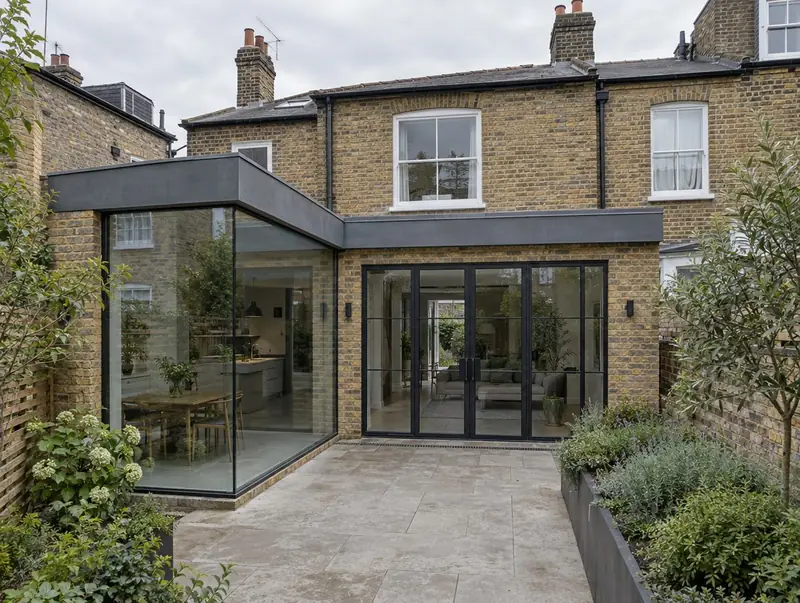
A wraparound extension combines a side return and a rear extension into one L-shaped addition. It gives the largest possible ground floor, often creating an open-plan kitchen, dining and living space across the whole width of the house.
How much does a wraparound extension cost in the Highlands and Islands?
In the Highlands and Islands, a wraparound extension typically costs £2,150–£3,100 per m² of floor area, including VAT at 20% (standard rate). For a typical 28 m² project that is roughly £60,000–£87,000. Prices in Scotland sit near the national average for this kind of work, and the range for the Highlands and Islands reflects that. Design, structural calculations and council fees are extra.
| Size or type | Guide range |
|---|---|
| Smaller project (20 m²) | £43,000–£62,000 |
| Typical project (28 m²) | £60,000–£87,000 |
| Larger project (39 m²) | £84,000–£121,000 |
| Rate per m² | £2,150–£3,100 |
What moves the price most:
- Access for materials on terraced streets
- Kitchen and flooring specification
- Agreements with neighbours on shared walls
- Total footprint and the amount of glazing
Your exact price depends on the survey and drawings. The guide price tool gives a quick range in the meantime.
Do you need planning permission for a wraparound extension in the Highlands and Islands?
Approvals for a wraparound extension in the Highlands and Islands follow the rules for Scotland. In Scotland a wraparound extension normally needs planning permission and a building warrant.
Scotland has no Party Wall Act. Work on shared walls is governed by your title deeds, the Tenements (Scotland) Act 2004 for flats, and common law, so we agree arrangements with neighbours in writing before work starts.
We check this for your address before design work starts, so there are no surprises later.
What we handle
On a typical wraparound extension we handle:
- Structural engineer’s design for steels and supports
- Design and planning application
- Building control completion
- Foundations and drainage
- Walls, roof and glazing
- Removal of internal and external walls
How long does it take?
Expect 12 to 18 weeks on site. Before that, surveys, drawings and approvals usually take 3 to 4 months, longer if the council asks for changes.
Building in the Highlands and Islands
In Scotland, bungalows and one-and-a-half-storey homes are common, so dormer conversions are a popular way to add bedrooms.
Towns we cover in the Highlands and Islands include Inverness, Stornoway, Fort William, Nairn, Thurso and Kirkwall.
How it works
- 01
Visit and measured survey
A free visit to understand the project, check access and take measurements.
- 02
Design and fixed quote
Drawings, structural calculations and an itemised, fixed price for the agreed specification.
- 03
Permissions sorted
Applications, building control and neighbour arrangements, all before the start date.
- 04
Construction and completion
We build, put right any snags and hand over the building control certificate.
Questions about wraparound extensions in the Highlands and Islands
What about the old back addition?
The side wall of the back addition is usually removed and replaced with a steel beam, so the old kitchen joins the new space.
How much does a wraparound extension cost in the Highlands and Islands?
In the Highlands and Islands, a wraparound extension typically costs £2,150–£3,100 per m² of floor area, including VAT at 20% (standard rate). A typical 28 m² project comes to roughly £60,000–£87,000. Your fixed price depends on the survey and drawings.
Can we keep a separate living room?
Yes. Many clients keep the front room separate and open up only the back of the house.
Who approves a wraparound extension in the Highlands and Islands?
Planning matters in the Highlands and Islands go to the council covering your address, and the work needs a building warrant. We prepare and submit the applications for you.
Is a wraparound worth it?
It gives the biggest ground-floor space without going upwards. Whether it adds value depends on your street and house, so we suggest checking local sale prices before committing.
Do I need planning permission for a wraparound extension in the Highlands and Islands?
In Scotland a wraparound extension normally needs planning permission and a building warrant.