
What is a wraparound extension?
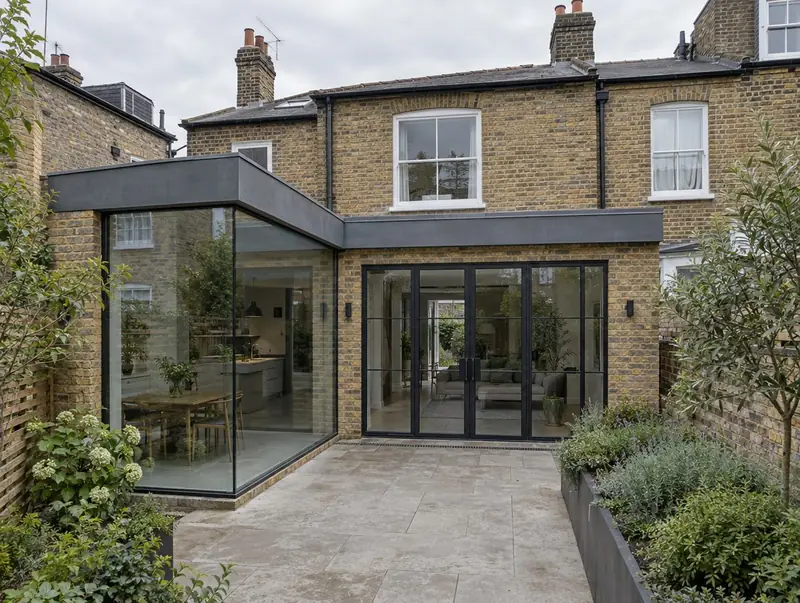
A wraparound extension combines a side return and a rear extension into one L-shaped addition. It gives the largest possible ground floor, often creating an open-plan kitchen, dining and living space across the whole width of the house.
How much does a wraparound extension cost in Holyhead?
In Holyhead, a wraparound extension typically costs £2,000–£2,950 per m² of floor area, including VAT at 20% (standard rate). For a typical 28 m² project that is roughly £56,000–£82,500. That range is adjusted for Wales, where domestic building work typically costs around 8% below the national average. Design, structural calculations and council fees are extra.
| Size or type | Guide range |
|---|---|
| Smaller project (20 m²) | £40,000–£59,000 |
| Typical project (28 m²) | £56,000–£82,500 |
| Larger project (39 m²) | £78,000–£115,000 |
| Rate per m² | £2,000–£2,950 |
What moves the price most:
- Drainage changes
- Total footprint and the amount of glazing
- Party wall surveyor fees for one or both neighbours
- Access for materials on terraced streets
A guide range is only a starting point: the guide price tool gives an instant figure for your size, and a free survey turns it into a fixed quote.
Do you need planning permission for a wraparound extension in Holyhead?
Before anything is built in Holyhead, we confirm which approvals apply in Wales. In Wales a wraparound extension combines side and rear elements; it can only be permitted development if each part meets the limits, so many need a householder planning application.
Building regulations in Wales are set by the Welsh Government. Approval comes from the council’s building control service or a registered building control approver, with inspections during the work and a completion certificate at the end.
At the survey we check your house’s planning history and any restrictions, and tell you which route applies.
What we handle
From survey to sign-off, the job normally involves:
- Structural engineer’s design for steels and supports
- Building control completion
- Design and planning application
- Walls, roof and glazing
- Party wall notices and surveyor liaison
- Foundations and drainage
How long does it take?
Build time is typically 12 to 18 weeks on site. Allow time beforehand for drawings and approvals, usually 3 to 4 months.
Building in Holyhead
Terraced houses in Welsh towns often have narrow plots, which suits rear and side return extensions and rear dormers.
Holyhead sits in Gwynedd, about 22 miles west of Bangor. We cover the whole of Holyhead, including postcodes LL65.
How it works
- 01
Free visit
We look at the property, talk through what you want and measure up. There is no charge and no obligation.
- 02
Drawings and written quote
We prepare the design and give you a written, itemised quote with inclusions and exclusions.
- 03
Approvals in place
We handle planning, building control and neighbour notices before work starts.
- 04
Build and sign-off
We run the build to a written programme and hand over the completion certificate.
Questions about wraparound extensions in Holyhead
How long does a wraparound extension take in Holyhead?
Typically 12 to 18 weeks on site. Design and approvals beforehand usually take 3 to 4 months.
Will both neighbours be affected?
Usually only the neighbour on the side return side, but rear foundations near either boundary can trigger party wall notices.
What about the old back addition?
The side wall of the back addition is usually removed and replaced with a steel beam, so the old kitchen joins the new space.
How much does a wraparound extension cost in Holyhead?
In Holyhead, a wraparound extension typically costs £2,000–£2,950 per m² of floor area, including VAT at 20% (standard rate). A typical 28 m² project comes to roughly £56,000–£82,500. Your fixed price depends on the survey and drawings.
Do I need planning permission for a wraparound extension in Holyhead?
In Wales a wraparound extension combines side and rear elements; it can only be permitted development if each part meets the limits, so many need a householder planning application.
Is a wraparound worth it?
It gives the biggest ground-floor space without going upwards. Whether it adds value depends on your street and house, so we suggest checking local sale prices before committing.